
Foreign Founders: Skip the Company Seal in Singapore and Sign Remotely

Ray Tay
Foreign founders: why a company seal is optional in Singapore since 2017, how Section 41B lets you sign deeds, and practical remote signing workflows.
Published: 30 July 2026 · Last reviewed: 30 September 2026 · Reviewed by Ray Tay, Co-Founder & Managing Director, VIVOS PTE. LTD. (ACRA Filing Agent FA20240323 · MOM EA Licence 24S2425)
A company valuation is a professional estimate of your firm’s fair market value. For international entrepreneurs operating in Singapore, the process starts with two decisions: define the purpose of the valuation, then gather three years of financial statements and supporting contracts.
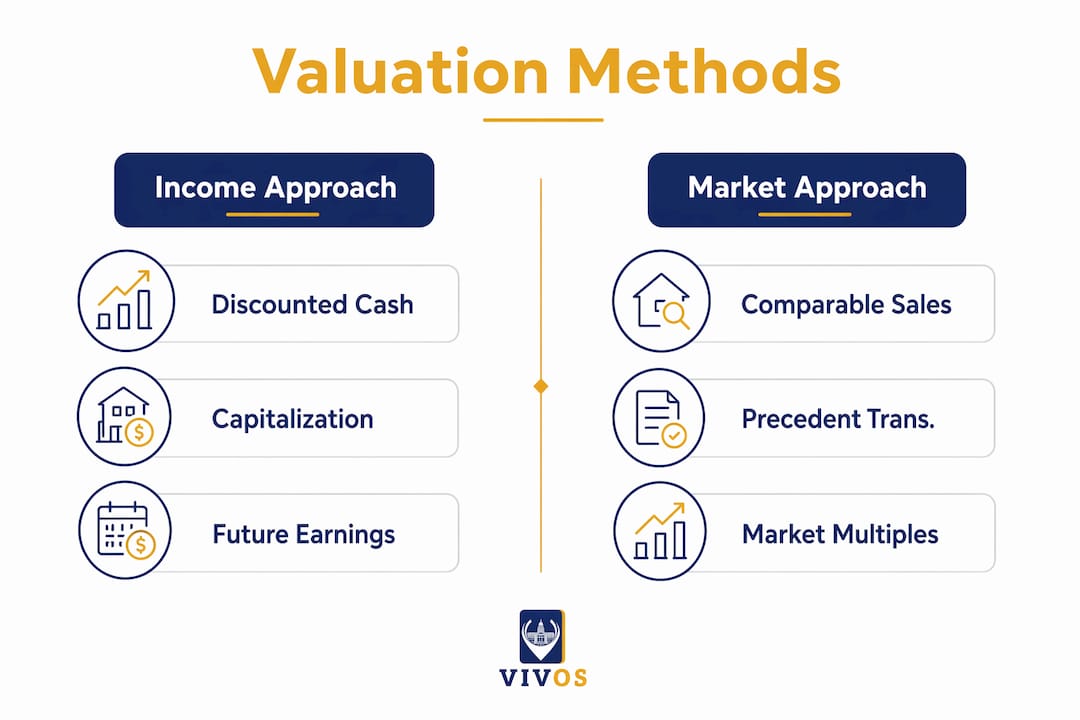
Three methods form the foundation of any Singapore business valuation:
Purpose determines which method applies. Fundraising and M&A engagements typically favor forward-looking income or multiples approaches, while IRAS tax compliance or accounting-driven valuations often require an asset-based methodology.
Common triggers for a Singapore company appraisal include fundraising rounds, mergers and acquisitions, ESOP structuring, bank financing, and regulatory compliance with IRAS or ACRA. ISCA-credentialed professionals and CFA/CVA holders are the recognized standard for signing off on reports accepted by Singapore regulators and investors.

On frequency: actively growing businesses should commission a valuation annually, particularly when fundraising or approaching a sale. Stable businesses can operate on a three-to-five-year cycle.
Immediate next steps:
Vivos provides the corporate infrastructure that makes a valuation engagement run cleanly. Services span company incorporation, corporate secretarial, accounting, tax compliance, and corporate advisory — all the functions that generate and maintain the records a valuator needs.
What a Singapore valuation engagement typically includes:
Documents to prepare before engaging a valuator:
Singapore valuations require adjustments that global templates miss: government grants, R&D subsidies, MAS licensing impacts, and transfer pricing rules can all shift the final figure. Intangibles such as brand equity and recurring revenue models also carry material weight with Singapore investors.
How to choose a credible valuator in Singapore:
Pro Tip: Always request a sensitivity analysis table in the draft report. If a valuator cannot show how the conclusion shifts under two or three alternate assumptions, that is a methodological gap worth addressing before the report is signed.
Vivos’s financial and business advisory services support the full preparation cycle: clean financials, compliant tax records, and organized corporate documents. Contact Vivos to request a consultation or a service overview tailored to your valuation timeline.
A credible Singapore company valuation requires the right method for your purpose, locally adjusted assumptions, and a signed report from a credentialed professional.
| Point | Details |
|---|---|
| Method follows purpose | DCF suits recurring cash flows; comparables suit M&A; asset-based suits property-heavy firms. |
| Valuation frequency | Annual for actively growing businesses; every three to five years for stable companies. |
| Singapore-specific adjustments | Grants, R&D subsidies, transfer pricing, and MAS licensing impacts must be reflected in the model. |
| Report quality signals | A credible report includes a valuation date, explicit assumptions, sensitivity analysis, and a signed independence statement. |
| Vivos as your preparation partner | Vivos provides incorporation, corporate secretarial, accounting, tax, and advisory services to prepare your company for a valuation engagement in Singapore. |
 2 January, 2025
 2 January, 2025

Foreign founders: why a company seal is optional in Singapore since 2017, how Section 41B lets you sign deeds, and practical remote signing workflows.
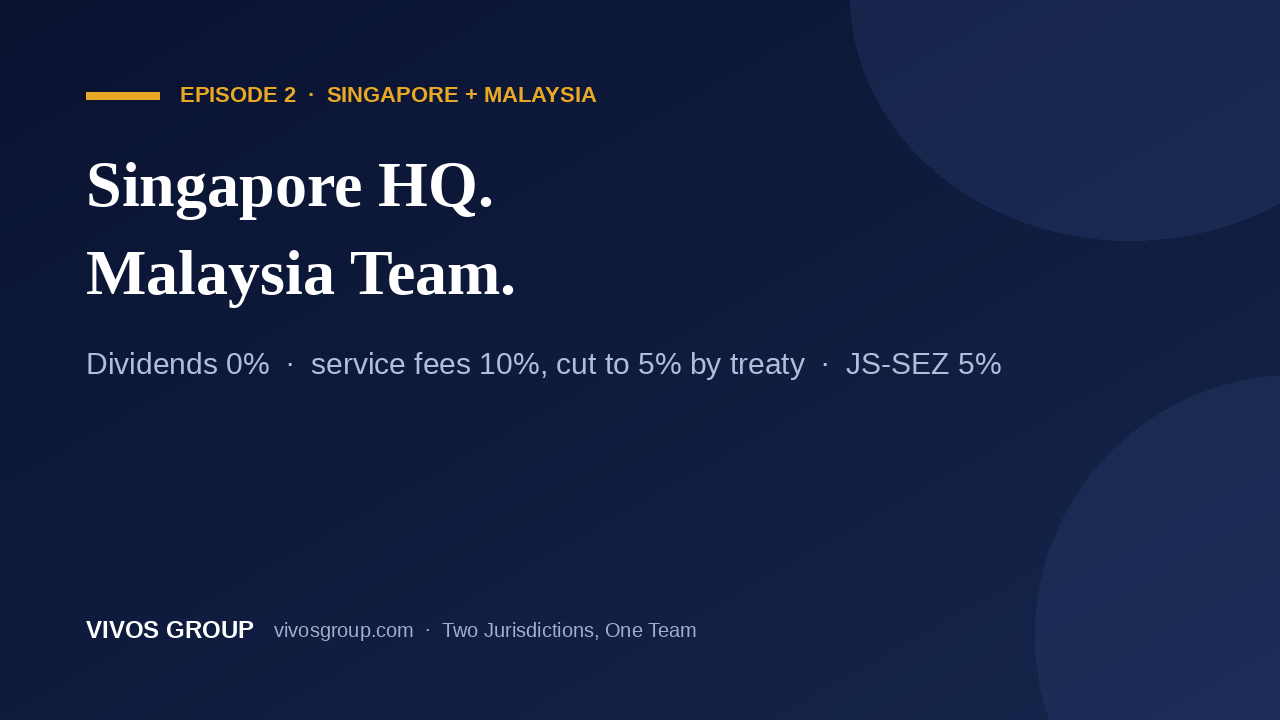
What the Singapore parent of a Malaysian Sdn. Bhd. must get right in 2026: tax-exempt Malaysian dividends under section 13(8), invoicing and 5% treaty withholding,…