
Why Singapore Comes Into Action For Chinese Companies
Published: 2 January 2025 · Last reviewed: 8 October 2025 · Reviewed by Ray Tay, Co-Founder & Managing Director, VIVOS PTE. LTD. (ACRA Filing Agent FA20240323 · MOM EA Licence 24S2425)


Related guides
Most Popular

 2 January, 2025
Malaysia’s Budget 2025: What The Dividend Tax Means For You
Frequently Asked
Questions
-
What is the Benefit of Routing Investments Through Singapore?
Routing investments through Singapore offers significant advantages for businesses operating in ASEAN. Singapore’s extensive network of Double Taxation Agreements (DTAs) reduces the tax burden on cross-border transactions, ensuring profits from production centers can be repatriated to Singapore at reduced rates. Additionally, with no withholding tax on dividends remitted from Singapore, companies can pass profits on to their parent entities without incurring further deductions, optimizing financial efficiency and global cash flow.
-
What are the benefits of setting up factories in ASEAN countries?
Cost-effective manufacturing, government incentives, and growing consumer markets.
-
Do Chinese companies need ODI approval to invest in Southeast Asia?
Yes, ODI approval is required. VIVOS provides expert guidance to ensure compliance.
-
Why Has Singapore Risen as a Destination for Managing ASEAN Expansion?
Singapore has emerged as the preferred hub for overseeing ASEAN expansion due to its strategic location, pro-business policies, and robust infrastructure. It offers unparalleled connectivity to key Southeast Asian markets, a transparent regulatory environment, and access to extensive trade networks. Its role as a financial and innovation hub ensures businesses can operate efficiently while leveraging local expertise and global resources.
-
What Steps Are Involved in Establishing a Company in Singapore?
Setting up a company in Singapore involves several key steps:
- Engage a Filing Agent and Choose a Company Name: The chosen name must be approved and should not duplicate an existing business name in Singapore.
- Appoint Key Personnel: Private limited companies are required to designate a local director, company secretary, and potentially auditors.
- Set Up a Registered Office: The company must have a physical address in Singapore. This can be outsourced if the business does not wish to lease a dedicated office.
- Register with the Accounting and Corporate Regulatory Authority (ACRA): Formal registration is mandatory, and some businesses may need additional licenses or documentation depending on their industry.
- Compliance Requirements: Companies must adhere to regulations, including holding their first annual general meeting within 18 months of incorporation and meeting other ongoing compliance obligations.
Recents Blogs



Foreign Founders: Skip the Company Seal in Singapore and Sign Remotely

Foreign founders: why a company seal is optional in Singapore since 2017, how Section 41B lets you sign deeds, and practical remote signing workflows.
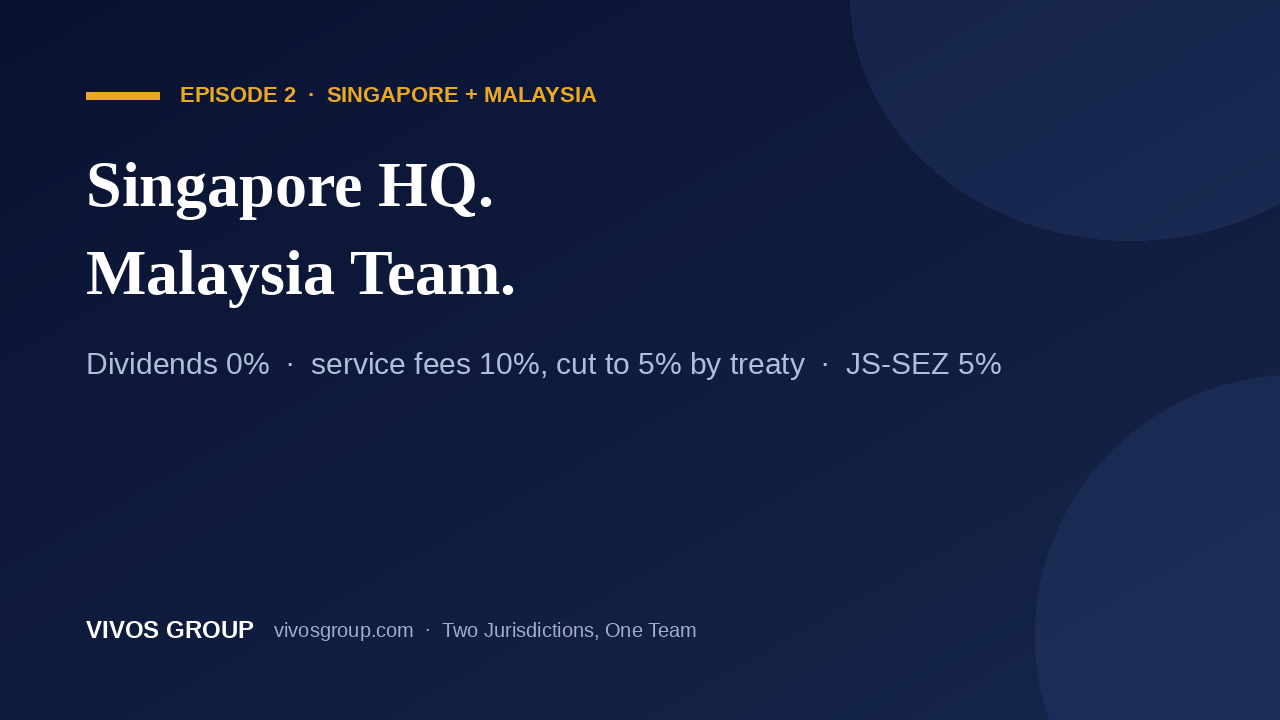
Running a Malaysian Team from Singapore: What the Singapore Company Must Get Right (2026)
What the Singapore parent of a Malaysian Sdn. Bhd. must get right in 2026: tax-exempt Malaysian dividends under section 13(8), invoicing and 5% treaty withholding,…