
What Rising India–Pakistan Tensions Teach Us About Strategic Global Mobility
Published: 10 May 2025 · Last reviewed: 8 October 2025 · Reviewed by Ray Tay, Co-Founder & Managing Director, VIVOS PTE. LTD. (ACRA Filing Agent FA20240323 · MOM EA Licence 24S2425)

Related guides
Most Popular
 2 January, 2025
Why Singapore Comes Into Action For Chinese Companies
 2 January, 2025
Malaysia’s Budget 2025: What The Dividend Tax Means For You
Frequently
Asked Questions
-
Why should rising India–Pakistan tensions influence my global mobility planning?
Geopolitical instability can disrupt daily life in ways that go beyond borders—affecting safety, travel, finance, and access to critical infrastructure. Strategic global mobility, such as obtaining permanent residency (PR), ensures you and your family have a secure and legal option to relocate if needed.
-
Is permanent residency (PR) the same as citizenship?
No. Permanent residency allows you to live and work in a country long-term without being a citizen. You retain your original citizenship while gaining access to local benefits such as healthcare, education, and legal stability in your new country.
-
Are PR programs only for the ultra-wealthy?
Not at all. While some programs (like Portugal’s Golden Visa) require financial investment, others (like Portugal’s D7 Visa or Singapore’s GIP for entrepreneurs) are accessible to remote workers, professionals, and business owners with stable income or a qualifying business track record.
-
How long does it take to obtain permanent residency?
The timeline varies by country. For instance, Portugal’s Golden Visa can take 4–6 months, while Singapore’s GIP may take 6–12 months depending on due diligence and documentation. Starting early gives you an advantage as processing slows during crises.
Recents Blogs



Singapore MVL: 12 Month Solvency Test for Foreign Founders

Learn how foreign founders can close a solvent Singapore company through an MVL, meet ACRA and IRAS filing deadlines, and complete a clean handover.
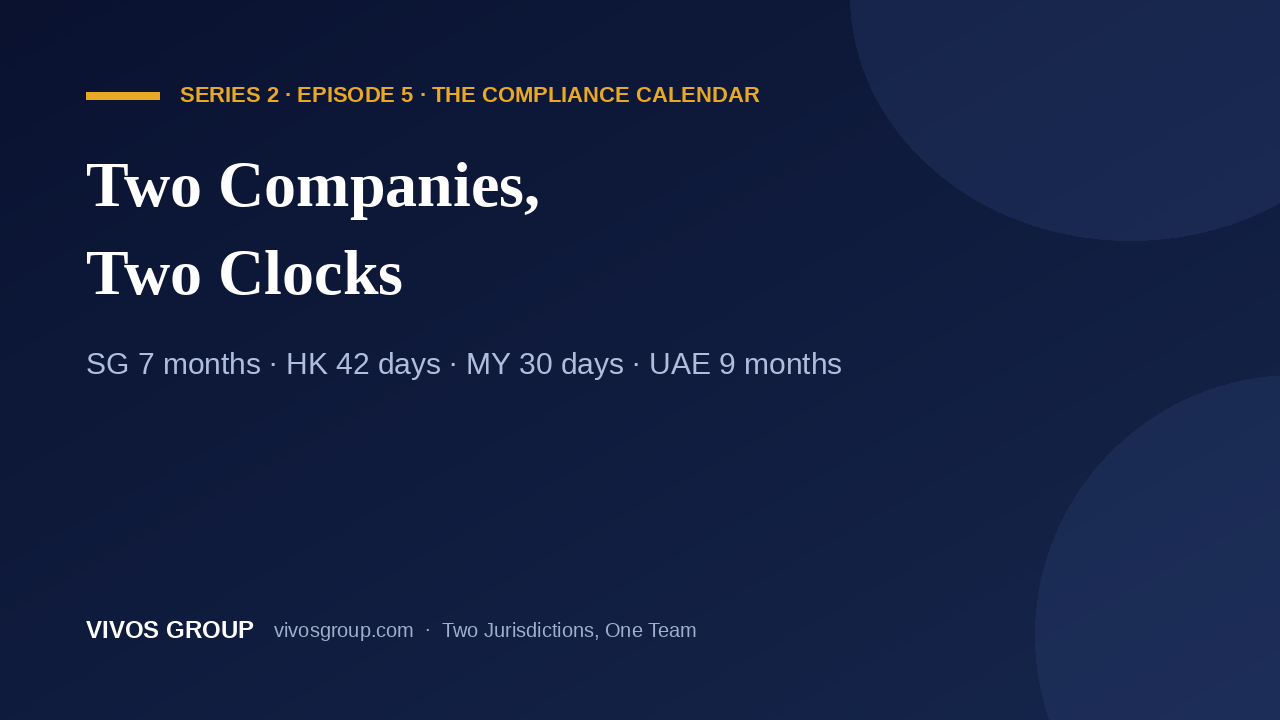
Singapore Compliance Calendar When You Also Run an Overseas Company (2026)
A Singapore company runs on its financial year end: ECI within 3 months, the ACRA annual return within 7 months for a non-listed company, and…