

GST 与 SST 的区别:企业合规与税务筹划指南

Ray Tay
了解 GST 与 SST 在征税机制、进项抵扣与合规要求的关键差异,帮助您制定更稳健的税务与申报计划,降低税负风险并优化现金流与合同条款。
Published: 2 October 2026 · Reviewed by Ray Tay, Co-Founder & Managing Director, VIVOS PTE. LTD. (ACRA Filing Agent FA20240323 · MOM EA Licence 24S2425)
A cash flow forecast projects the cash moving in and out of a business over a set period. Startups typically use a 13-week direct method for near-term liquidity and a 12-month indirect method for longer planning. Banks and investors ask for both to judge lending risk and runway before committing funds.
TL;DR:
- A 13-week direct forecast provides immediate liquidity insights, focusing on actual cash receipts and payments scheduled weekly.
- A 12-month indirect forecast offers a broader view for annual planning, relying on projected net income and adjusting for non-cash items.
- Building accurate forecasts requires gathering actual bank data, scheduling inflows and outflows precisely, and regularly reconciling with real bank balances.
- The forecast’s accuracy decreases over longer horizons, so stress-testing scenarios and incorporating conservative assumptions help prevent surprises.
- Foreign founders should explicitly model delays in opening bank accounts and transferring paid-up capital to ensure realistic cash flow timelines.
Cash flow forecasting is not an accounting exercise. It is the tool that keeps a startup solvent when revenue is uneven and expenses are fixed.
A forecast protects liquidity. It flags a shortfall weeks before it happens, giving founders time to delay a purchase, chase a late invoice, or draw on a credit line. Without one, insolvency risk shows up as a surprise rather than a plan.
Forecasts also guide timing decisions that founders make every month:
Cadence depends on the decision at hand. A 13-week rolling forecast, updated weekly, is the standard for managing payroll and supplier timing. A 12-month projection, reviewed monthly, supports budgeting and investor conversations. Quarterly and annual views matter for board reporting and tax planning, but they are too slow to catch a week-four cash crunch.
Cash flow forecasting splits into two core methods, plus a hybrid version lenders often request.
The 13-week direct method schedules actual cash receipts and payments, week by week, over roughly a quarter. It is the preferred tool for immediate liquidity management because it works from real bank data and known payment dates rather than accounting estimates. According to a neutral overview of cash flow forecasting, short-term direct forecasting is best suited to spotting a cash shortfall before it becomes a crisis, and a spreadsheet covering at least 90 days is a common practical starting point for small businesses.
The 12-month indirect method starts from projected net income and adjusts for non-cash items such as depreciation, plus changes in receivables, payables, and inventory. Some founders build a pro-forma balance sheet version instead, projecting assets and liabilities forward and deriving cash as the balancing figure. Indirect methods trade precision for reach: they are less accurate week to week but far more useful for annual budgeting, hiring plans, and pricing decisions.
A three-way forecast links the income statement, balance sheet, and cash flow statement into one model. Lenders and investors frequently ask for this version because it shows not just cash movement but the profit and balance sheet position driving it, which makes covenant testing and valuation checks possible from a single file.
Quick comparison of when each fits:
None of these methods replaces the others. Most startups run a rolling 13-week forecast for operations and layer a 12-month indirect projection on top for planning, producing a three-way version only when a lender or investor specifically asks for it.
Building a usable forecast is a sequence, not a single spreadsheet exercise. Follow these steps in order.
Two validation checks are worth running every cycle: confirm the opening cash balance matches your actual bank statement, and confirm every recurring outflow, like rent or CPF, has a row rather than being folded into a generic “expenses” line.
Pro Tip: Build the 13-week version in a plain spreadsheet before touching any software. You will understand your own cash cycle far better once you have typed every row yourself.
A forecast is only as useful as the categories behind it. The table below lists the rows most founders need, with example line items relevant to a company registered locally.
| Category | Type | Example line item | Timing note |
|---|---|---|---|
| Customer receipts | Inflow | Invoice payments from clients | Based on actual payment terms, not invoice date |
| Founder equity injection | Inflow | Paid-up capital transfer from overseas | Often delayed by bank account opening and transfer clearance |
| Loan proceeds | Inflow | Drawdown from a business loan or line of credit | Scheduled on approval and disbursement date, not application date |
| GST refund | Inflow | Refund from input tax exceeding output tax | Depends on filing frequency and IRAS processing |
| Payroll | Outflow | Monthly salary run | Fixed date, rarely negotiable |
| CPF employer contribution | Outflow | Monthly CPF for local hires | Due alongside payroll for Singapore citizen and permanent resident staff |
| GST payable | Outflow | Quarterly GST remittance | Timing shifts under the Cash Accounting Scheme/general-gst-schemes/cash-accounting-scheme), which lets eligible small businesses account for output tax only when payment is received |
| Rent | Outflow | Monthly office or registered address fee | Fixed monthly date |
| ACRA and IRAS fees | Outflow | Annual filing and corporate tax fees | Annual or per-filing, easy to forget in a weekly view |
| Nominee director fee | Outflow | Annual fee for a nominee resident director | Usually annual, paid in a single lump sum |
Founders using the Cash Accounting Scheme/general-gst-schemes/cash-accounting-scheme) should schedule GST rows against actual cash receipts rather than invoice dates, since the scheme ties output tax accounting to payment timing for eligible small businesses. Our GST registration guide covers registration thresholds and filing mechanics in more detail.
A rolling 13-week forecast works from a running cash balance, not isolated weekly totals. A simplified illustrative example: say a startup opens week one with $50,000 in the bank, expects $18,000 in customer receipts and $4,000 in a founder equity top-up that week, against $15,000 in payroll and $3,000 in rent and vendor payments. The closing balance for week one is $54,000, which becomes the opening balance for week two. Each week repeats the same pattern: opening balance, plus inflows, minus outflows, equals closing balance, carried forward.
A 12-month indirect projection compresses that same logic into monthly totals: a single row for total inflows, a single row for total outflows, and a closing cash balance column running left to right across twelve months. It trades weekly precision for a full-year view.
Converting one into the other is straightforward:
Accuracy expectations should shift with horizon. A 13-week direct forecast, built on actual invoices and known payment dates, should track closely to real bank movement week to week because it uses real cash data rather than estimates. A 12-month indirect projection will drift more, since it depends on assumptions about revenue growth and collection timing that compound over the year.
Common pitfalls show up in nearly every early-stage forecast:
Mitigations are just as concrete. Apply a conservative collection rate rather than assuming full and on-time payment. Keep a cash buffer policy, a fixed minimum balance the business will not dip below without a plan. Reconcile the forecast against the actual bank balance weekly, not monthly. Run a stress-tested scenario alongside the base case so a slow month does not arrive as a surprise.
Pro Tip: Treat any week where actual cash lands more than 10% off your forecast as a signal to revisit your collection assumptions, not just a one-off anomaly.
Founders funding a new company from overseas face a timing gap that domestic founders do not. Corporate bank account opening can take several weeks after incorporation, and international wire transfers for paid-up capital add further delay before funds are usable locally.
Model this explicitly rather than assuming day-one access to capital. Schedule the paid-up capital injection in the forecast on the week funds are expected to clear, not the week they are wired, and build a short buffer around that date. Our guide on incorporating as a foreign founder walks through the sequencing between incorporation, bank account opening, and capital transfer in more detail.

A bank-ready forecast states its assumptions plainly, includes at least one conservative sensitivity row, and reconciles cleanly to the current account balance. Bankers and investors judge runway and lending risk from how clearly a forecast shows its own logic, not from optimism.
VIVOS provides company incorporation for foreign founders, including nominee resident director, registered address, corporate secretary, bookkeeping, and forecasting support, in multiple jurisdictions.
“Founders often build their first forecast around revenue they hope to collect, not revenue they have actually secured. The gap between those two numbers is where most early cash crunches come from,” says Ray Tay, Managing Director of VIVOS.
Outsourced bookkeeping closes that gap. A forecast is only as reliable as the transaction data behind it, and a clean monthly close with an up-to-date bank feed removes the guesswork that otherwise creeps into collection and payment assumptions.
A founder can run a 13-week forecast alone with clean bank data and a simple spreadsheet. Outsourcing becomes worthwhile once shortfalls recur, cash flows span multiple currencies, or a lender requests a formal three-way projection.
Before engaging a provider, prepare bank-feed access, a chart of accounts that matches your reporting needs, an agreed update cadence, and a sample deliverable to review. A provider with existing bookkeeping infrastructure can turn that setup into a bank-ready forecast far faster than building one from scratch.
— Ray
VIVOS offers company incorporation for foreign founders, covering nominee resident director, registered address, corporate secretary, bookkeeping, and forecasting, with services available in several countries and support in multiple languages.
A typical engagement runs in a straightforward sequence:
Founders who want a forecast built on real reconciled data rather than estimates can view incorporation and pricing details or explore accounting and bookkeeping services to see how the two connect.
A cash flow forecast estimates the timing and amount of cash expected to move in and out of a business over a future period. It differs from a historical cash flow statement, which reports what already happened, according to a neutral overview of cash flow forecasting.
Forecasting approaches generally fall into direct scheduling of cash receipts and payments, indirect projection from adjusted net income, pro-forma balance sheet modeling, and combined three-way projections linking all three statements. Startups most often use the direct method for short-term liquidity and an indirect or three-way method for longer planning and investor reporting.
The core formula is opening cash balance, plus expected inflows, minus expected outflows, equals closing cash balance, and that closing figure becomes the next period’s opening balance. This logic applies whether the period is a week in a 13-week forecast or a month in a 12-month projection.
A three-way forecast links the income statement, balance sheet, and cash flow statement into a single model, so cash movement is tied directly to profit and balance sheet changes. Lenders and investors often request this version because it supports covenant testing and valuation checks that a cash-only forecast cannot provide.

 2 January, 2025
 2 January, 2025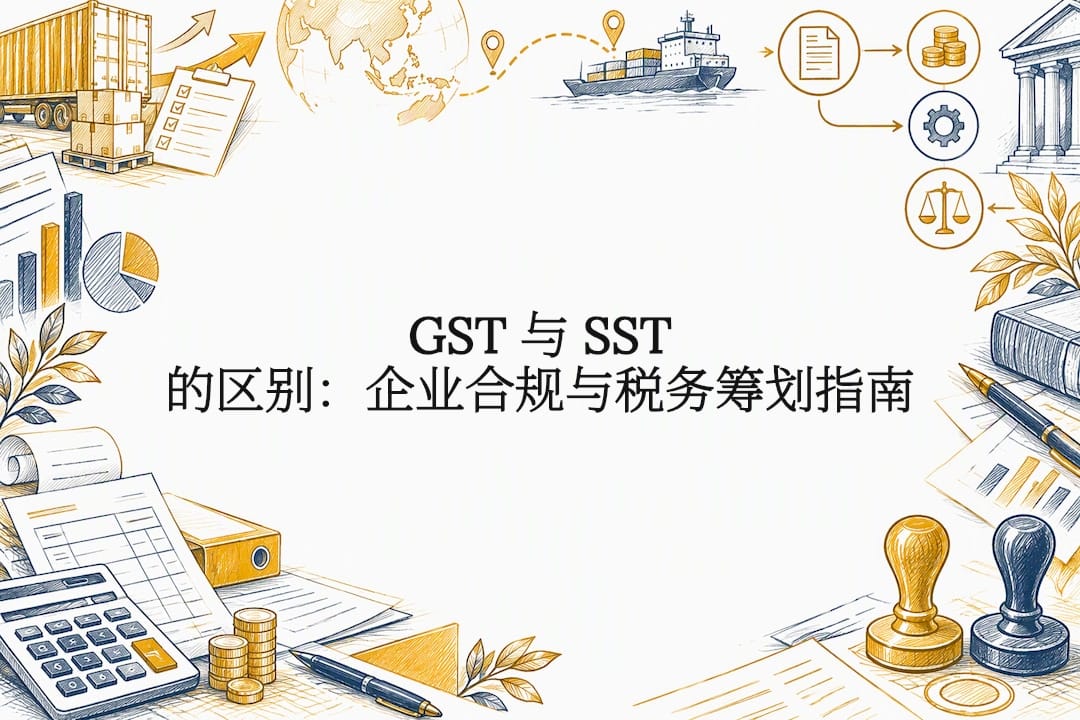
了解 GST 与 SST 在征税机制、进项抵扣与合规要求的关键差异,帮助您制定更稳健的税务与申报计划,降低税负风险并优化现金流与合同条款。

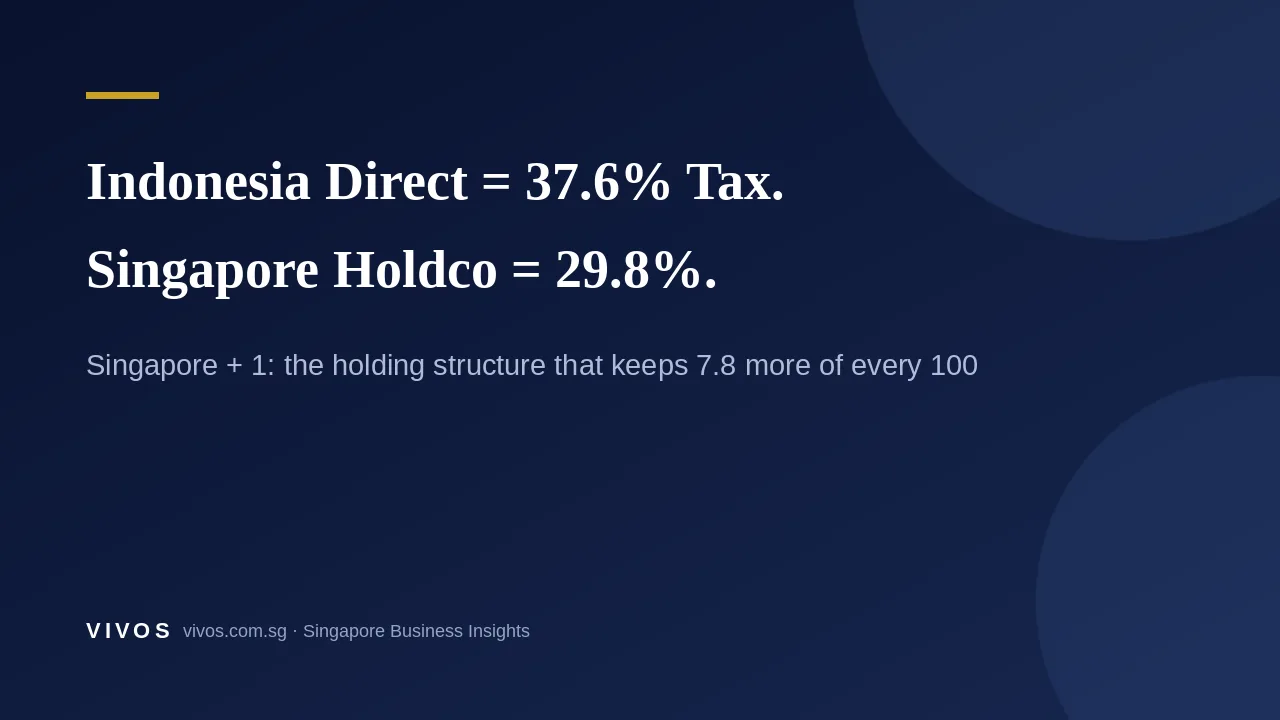
直接持有印尼公司:22%企业所得税+20%股息预提税=37.6%;通过持股≥25%的新加坡控股公司,协定税率10%,合计29.8%,且退出时印尼不征税。