


Crossover at $12.5M: Valuation Cap vs Discount for Singapore Founders
Master the cap versus discount crossover. Calculate the $12.5M breakpoint from a $10M cap and 20% discount, model conversions, and avoid Singapore filing...
Published: 7 February 2025 · Last reviewed: 25 August 2026 · Reviewed by Ray Tay, Co-Founder & Managing Director, VIVOS PTE. LTD. (ACRA Filing Agent FA20240323 · MOM EA Licence 24S2425)
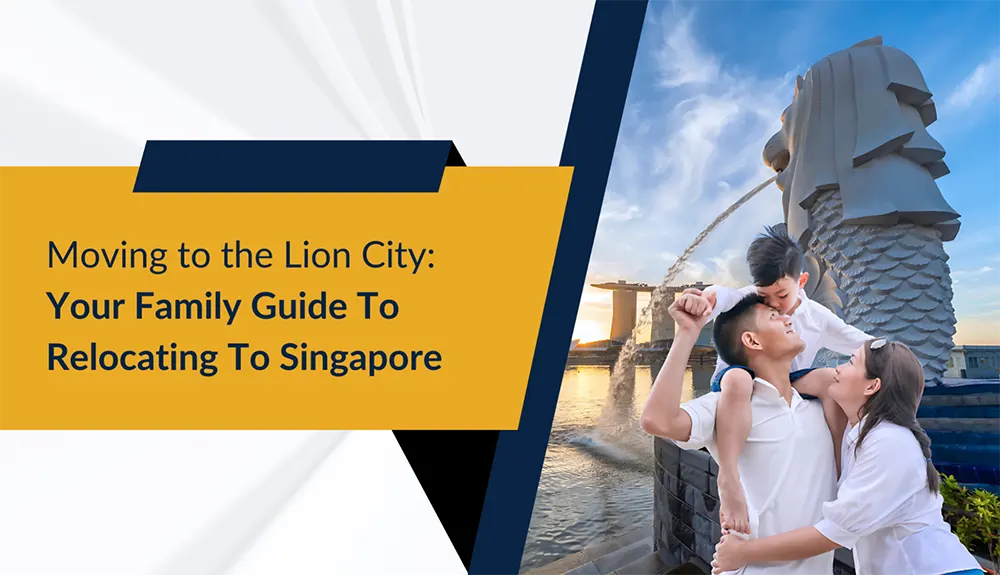
Singapore consistently ranks among the world’s top destinations for families seeking safety, opportunity, and quality of life. Whether you are an entrepreneur, a senior professional, or a corporate transferee, moving to Singapore with your family is one of the most strategically sound decisions you can make.
The city-state offers low crime, world-class healthcare, a world-renowned education system, and a business environment that ranks among the most competitive globally. If you are wondering how to move to Singapore, or more specifically, how to relocate to Singapore with children, this authoritative guide addresses every critical step from securing the right pass to enrolling your child in school and managing your cost of living.
The first step in relocating to Singapore is securing the appropriate visa. The most common options for families include:
Before applying, verify the latest eligibility criteria for your chosen pass type. As of 2026, the Employment Pass minimum qualifying salary is S$5,600/month (S$6,200 for financial services), with all applications assessed under the COMPASS framework.
From January 2027, this rises to S$6,000 (S$6,600 for financial services). Start the process at least 3-4 months early, and work with an experienced immigration specialist to maximise approval rates.
Singapore offers a variety of housing options, from high-rise apartments to landed properties. If you are asking yourself, “How can I move to Singapore with my family?”, one of the most important steps is securing the right home that suits your lifestyle and budget. Consider these factors when choosing a place to live:
For families moving to Singapore with children, early school research is non-negotiable. Popular international schools include Singapore American School (SAS), UWCSEA, Tanglin Trust, and Stamford American International School. Waiting lists at top schools can extend to 12-18 months, so families relocating to Singapore with children are strongly advised to apply simultaneously with their visa process, not after. The Ministry of Education (MOE) maintains a full directory of registered schools.
Singapore has a world-class education system, with various options for expat children:
Research different schools thoroughly, considering factors like curriculum, location, fees, and extracurricular activities. Visit schools and talk to current parents to get a better understanding of the school environment.
Expats do not have access to government MediShield Life subsidies, making private health insurance essential when relocating to Singapore with family. Singapore’s Ministry of Health provides a hospital fee benchmarking tool to help compare costs across providers. The two largest private hospital groups, Mount Elizabeth and Gleneagles, are consistently ranked among Asia’s best, with most international health plans offering direct-billing arrangements with both.
Singapore has an excellent healthcare system. Expats can access both public and private healthcare facilities.
Secure comprehensive health insurance that covers your family’s needs. Familiarize yourself with the healthcare options available and locate nearby clinics and hospitals.
Singapore is one of the world’s most expensive cities, on par with Zurich and New York, but costs are highly variable based on lifestyle choices. For anyone planning to move to Singapore with a family, building a realistic budget from day one is essential. Below is an indicative monthly budget breakdown for a family of four in 2026:
The Land Transport Authority (LTA) manages Singapore’s transport network, its journey planner, and EZ-Link top-up services. As of 2026, the MRT network spans over 200 km across six lines, making most family-friendly neighbourhoods and international school zones easily accessible without a car.
Singapore is a multicultural society with a diverse population. Embrace the local culture and explore the various neighborhoods and attractions. Join expat groups and communities to connect with other newcomers and build a support network.
The Singapore Global Network (SGN), an initiative by the Singapore Economic Development Board, offers a dedicated resource hub for new arrivals. Families moving to Singapore with children will also find school-based parent networks, community centres (CCs) run by the People’s Association, and established expat clubs such as the American Club, the British Club, and the Swiss Club invaluable for building a social foundation quickly.
Singapore offers a wide range of family-friendly activities, including:
English is the primary language of business, government, and daily life in Singapore, making the transition straightforward for most expat families moving to Singapore. However, learning basic Mandarin or Malay can meaningfully enrich your experience, particularly when navigating local neighbourhoods, hawker centres, and community interactions.
Singapore consistently ranks among the world’s top countries for internet speed and mobile connectivity, a reassuring advantage for families relocating to Singapore who need to stay in touch with loved ones back home. Upon arrival, pick up a local SIM card from providers such as Singtel, StarHub, or M1, all available at Changi Airport and major convenience stores island-wide.
Relocating to Singapore with your family can be an exciting and rewarding experience. Whether you’re moving for work or establishing a Singapore family office, planning, consulting a Singapore immigration specialist, doing your research, and embracing the local culture, you can ensure a smooth transition and enjoy all that Singapore has to offer.
At VIVOS, we work with families and professionals navigating every dimension of the Singapore relocation process, from Employment Pass applications & Dependant’s Pass submissions to company incorporation, accounting, and tax structuring. Our team of licensed advisors removes the complexity from your move so you can focus on what matters most.
Check out this post on Cracking the Code: How to Get a Singapore Employment Pass (EP) – Entrepreneur Edition


VIVOS simplifies your Singapore family relocation, from visa approvals to school enrolment and beyond.
| Item | Detail (as of 2026) |
|---|---|
| Employment Pass salary | Minimum S$5,600 per month (S$6,200 for financial services); rising to S$6,000 and S$6,600 from January 2027 |
| Premium option | ONE Pass for top-tier talent earning at least S$30,000 per month; employer-independent |
| Family passes | Dependant's Pass for spouse and children; Long-Term Visit Pass for common-law partners, step-children, parents and in-laws |
| Schools | Waiting lists at top international schools can run 12 to 18 months; apply alongside the visa process |
| Property note | Foreign buyers face 60 percent Additional Buyer's Stamp Duty; most expat families rent |
| Indicative budget | Approximately S$15,000 to S$22,000 per month for a family of four, including rent, education, food, transport and insurance |
The Employment Pass is the primary route for skilled professionals, managers and executives with a Singapore job offer. As of 2026 it requires a minimum qualifying salary of S$5,600 per month (S$6,200 in financial services), assessed under the COMPASS framework, and allows the spouse and children to apply for Dependant's Passes.
Standard processing takes approximately 3 to 8 weeks from submission. Incomplete documentation or COMPASS scoring issues can extend timelines, so families should start the overall relocation process 3 to 4 months in advance.
Yes, subject to availability and Ministry of Education placement assessments. Local school fees for international students are substantially lower than international school fees, though the national curriculum differs from most home-country systems.
Yes. Expats do not receive government MediShield Life subsidies, so comprehensive private health insurance is essential. Singapore's leading private hospital groups offer direct billing with most international health plans.
A family of four should budget roughly S$15,000 to S$22,000 per month covering rent, education, food, transport and insurance. Housing typically runs S$5,500 to S$9,000 monthly and international school fees range from about S$26,000 to S$58,000 per child per year.
Parents and in-laws do not qualify for a Dependant's Pass, but they may be eligible for a Long-Term Visit Pass issued at ICA's discretion, or can visit on a short-term Social Visit Pass.
What is the most common visa route for families moving to Singapore?
The Employment Pass (EP) is the primary route for professionals. Once approved, your spouse and unmarried children under 21 may apply for a Dependant’s Pass. As of January 2026, the minimum EP qualifying salary is S$5,600/month (S$6,200 for financial services), assessed under the COMPASS framework.
How much does it cost to relocate to Singapore with a family?
Total first-year costs vary widely by lifestyle. Monthly housing typically runs S$5,500–S$9,000; international school fees range from S$26,000–S$58,000 per year per child. A family of four should budget approximately S$15,000–S$22,000 per month, inclusive of rent, education, food, transport, and insurance.
How long does it take to obtain an Employment Pass for Singapore?
Standard processing takes approximately 3–8 weeks from the date of application submission. Incomplete documentation or COMPASS scoring issues can extend timelines. Engaging a licensed immigration agent can reduce delays and improve approval outcomes.
Do I need a separate visa to bring my parents or in-laws to Singapore?
Parents and in-laws do not qualify for a Dependant’s Pass. They may be eligible for a Long-Term Visit Pass (LTVP), issued at ICA’s discretion, or may enter on a short-term Social Visit Pass. Eligibility and duration are assessed on a case-by-case basis.
What is a family office, and why consider setting one up in Singapore?
A family office is a private entity that manages the wealth, investments, and affairs of a high-net-worth family. Singapore is a preferred location due to its stable political environment, robust financial infrastructure, favorable tax regimes, and comprehensive legal framework. These factors make it an attractive hub for wealth management and succession planning.
Is Singapore a good place to raise a family?
Yes! Singapore is known for its safety, excellent education, healthcare, and family-friendly attractions.
What is the immigration process in Singapore?
To enter Singapore, ensure your passport is valid for at least 6 months. Depending on your nationality, you may need a visa, which should be applied for 1–4 weeks before travel. Submit the SG Arrival Card within 3 days before arrival. Immigration clearance may be done via automated lanes at checkpoints. For long-term stay or permanent residency, applications are submitted online through the ICA portal.
What are the best areas for expats to live in Singapore?
Popular expat-friendly areas include Orchard, Holland Village, East Coast, and Sentosa.
Can my children attend local schools in Singapore?
Yes, subject to availability and placement assessments administered by the Ministry of Education. Local school fees for international students are substantially lower than those in international schools. However, the national curriculum differs significantly from most home-country systems.
Master the cap versus discount crossover. Calculate the $12.5M breakpoint from a $10M cap and 20% discount, model conversions, and avoid Singapore filing...

Which consulting niches need a licence in Singapore, PDPA obligations every consulting firm carries, and the SS 680:2021 standard that replaced TR 43:2015 for Enterprise…
CGT Event I1 exit tax on ceasing Australian residency, and CFC attribution rules for a Singapore entity given its status as an unlisted country -…


Incorporated in Singapore under the Companies Act 1967 UEN 202416468C | ACRA Registered Filing Agent FA20240323 | MOM Employment Agency Licence 24S2425
Malaysia – VIVOS (M) Sdn. Bhd. | Registration Number:
People’s Republic of China, Hong Kong – VIVOS CORPORATE SERVICES (HK) LTD. | Business Registration Number: 80545137
United Arab Emirates, Dubai – VIVOS CORPORATE SERVICES L.L.C. | Commercial Licence Number: 1638200