Accounting Year End Singapore: FYE Rules and Deadlines

Discover key rules and deadlines for your accounting year end in Singapore. Stay compliant and streamline your financial reporting today!

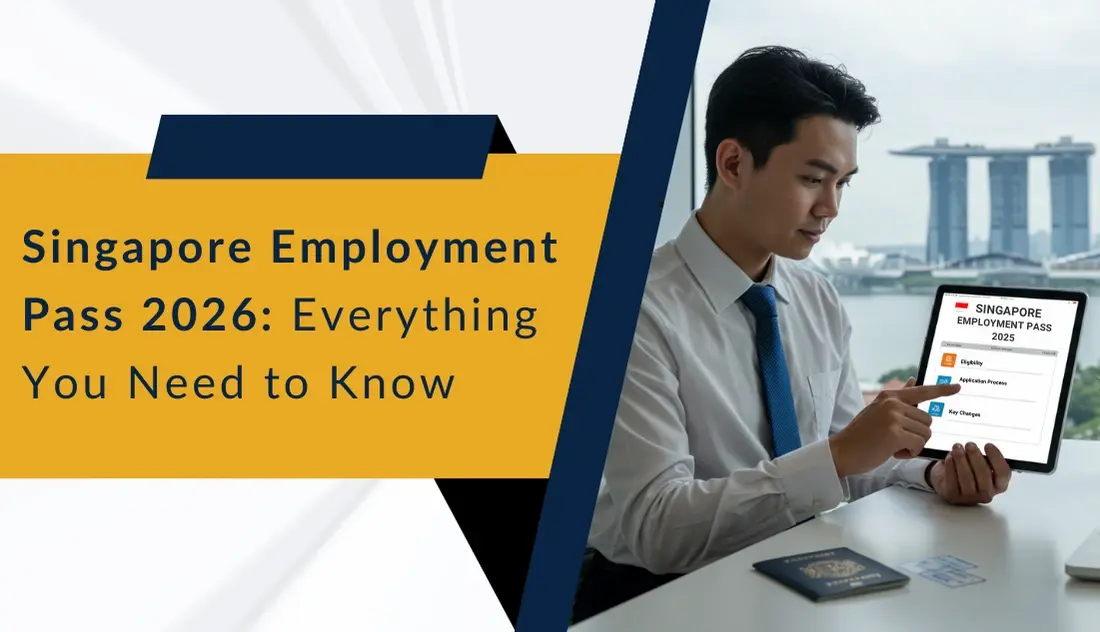
Singapore has long been a launchpad for global talent, and for good reason. With its strong economy, transparent regulations, and thriving industries, it’s a natural destination for professionals looking to build their careers in Asia. For foreign nationals aiming to live and work here, the Singapore Employment Pass is often the first step.
With this work visa, eligible individuals can start working for a registered Singaporean company. Additionally, it provides family members with dependent passes and, in the long run, can be a route to permanent residency. To put it briefly, it’s your gateway to a world of professional opportunity, going beyond simple documentation.
So what does the Employment Pass in Singapore involve in 2026 and beyond? Who qualifies, what’s the process, and how can you apply using Employment Pass Online or by visiting the Employment Pass Service Centre?
This guide walks you through it all: eligibility criteria, application steps, renewals, and key requirements to help you navigate your move with confidence.
The Employment Pass (EP) is a key work visa that enables foreign professionals, managers, and executives to live and work in Singapore. Issued by the MOM (Ministry of Manpower), it is designed for individuals with strong professional credentials, typically in specialised or senior roles.
To be eligible, candidates must first secure a job offer from a Singapore-based company. The role should meet MOM’s qualifying salary criteria, which currently start at SGD 5,000 per month for recent graduates and are higher for experienced applicants and those working in the financial sector.
The Employment Pass is frequently the first step toward establishing a long-term career in Singapore and is more than just a work permit. It provides opportunities for family relocation, renewals, and even future permanent residency in addition to enabling professionals to contribute to one of Asia’s most vibrant economies.
The EP Pass remains one of the most critical and valuable work visas in Singapore for individuals seeking to advance their careers in a globally connected, innovative environment.
Both the employer and applicant must meet the Ministry of Manpower (MOM)’s criteria to apply for a Singapore Employment Pass (EP). The EP is designed for foreign professionals in executive, managerial, or specialised roles.
Key considerations include the candidate’s salary, qualifications, and job scope, ensuring fair assessment and alignment with Singapore’s labour policies.
| Criteria | Details |
|---|---|
| Who it’s for | Foreign professionals, managers, and executives who have a job offer in Singapore. |
| Minimum Monthly Salary | SGD 5,000 (higher for more experienced candidates or applicants in the financial sector). |
| Educational Background | Recognised qualifications (university degree or above). However, substantial professional experience may offset academic requirements. |
| Job Role | Must be in a managerial, executive, or specialised role. |
| Employer Criteria | The hiring company must be registered in Singapore and meet the Fair Consideration Framework (FCF) for local hiring practices. |
| Complementarity Assessment Framework (COMPASS) | Applicants must meet at least 40 points under COMPASS, which assesses salary, qualifications, diversity, and local firm support. |
| Fair Hiring Practices | Employers must advertise the job on MyCareersFuture.sg for at least 14 days before applying (unless exempted). |
| Pass Validity | First-time pass: Up to 2 years. Renewal: Up to 3 years. |
| Renewal Conditions | Continued employment in the same role, salary progression, and good compliance history. |
Even if you meet the eligibility criteria, your application can be delayed or even rejected if you miss basic preparation.
Here’s a quick checklist to help you avoid that.
Make sure you have a confirmed role with a Singapore-registered company. You cannot apply for an EP without one.
The job must be executive, managerial, or highly specialised in nature, something that justifies hiring global talent.
The EP requires a minimum fixed monthly salary of:
Hold a degree or diploma from a recognised institution. Substantial professional experience can offset academic gaps.
Your employer must advertise the job on MyCareersFuture.sg for 14 calendar days, unless exempt.
6. Get Your Documents Ready
You’ll need:
The hiring company should have no past compliance issues and must demonstrate a clear need to hire foreign professionals.
Neither you nor your employer should have ongoing investigations, unpaid levies, or black marks with MOM or other Singapore authorities.
Both the hiring organisation and the foreign applicant must prepare essential documents in advance of submission to guarantee a seamless and prompt application process. This is a concise summary of what is usually needed.
These documents are submitted by the Singapore-based company or its authorised employment agent:
Foreign professionals need to submit the following:
According to Singapore’s Ministry of Manpower (MOM), most Employment Pass applications submitted online through EP Online are processed within 10 business days. However, if the application is from an overseas employer without a registered office in Singapore, the process may take up to 8 weeks.
According to MOM, here’s a breakdown of the fees you can expect when applying for an Employment Pass:
| Fee Type | Amount (SGD) | Description |
|---|---|---|
| Application Fee | S$105 | Payable at the time of submitting the EP application via EP Online. |
| Issuance Fee | S$225 | Payable upon approval of the pass and upon your request to issue and collect it. |
| Multiple Journey Visa (if applicable) | S$30 | Required for certain nationalities, allowing multiple entries into Singapore. |
It can be discouraging to receive a “no” on your Employment Pass (EP) application, particularly after you have taken the time to gather the required paperwork. However, a rejection is frequently not final. It’s MOM’s way of saying that before proceeding, something needs to be changed.
Let’s break down what usually goes wrong, and how you can turn it around.
If the proposed salary seems too low for the position or the candidate’s experience, MOM may flag it.
The applicant’s education or professional background might not fit the job requirements.
New businesses or those without strong financials may find it harder to justify foreign hires.
If the company didn’t show evidence of trying to hire locals—as required under the Fair Consideration Framework—it could work against the application.
Missing details, mismatched info, or outdated documents are some of the most common deal-breakers.
In some cases, it’s smarter to fix the gaps and submit a fresh application rather than appealing immediately.
If not renewed in time, the EP holder must stop working immediately and leave Singapore, unless granted a short-term visit pass to remain temporarily.
If an employee is leaving the company or no longer working in Singapore, the EP must be cancelled. This step is the employer’s responsibility.
Only the employer or an authorised employment agency can carry out the cancellation.
5. When to Cancel
The EP must be cancelled within one week of the employee’s final working day.
6. How to Cancel
After cancellation, the pass holder is usually issued a 30-day short-term visit pass to wrap up personal affairs and leave Singapore.
Any linked Dependant Passes or Long-Term Visit Passes are automatically cancelled along with the main EP.
Before cancellation, the employer must:
According to Singapore’s Ministry of Manpower (MOM), the Employment Pass (EP) framework is regularly reviewed to keep pace with economic conditions and workforce needs. From 2025 onward, several vital updates will take effect, reshaping salary requirements, assessment benchmarks, and pass validity options.
For employers and professionals, understanding these changes early is essential to avoid delays, ensure compliance, and plan confidently for hiring or relocation.
| Update Area | Changes in 2025 | Changes in 2026 | Practical Impact |
|---|---|---|---|
| Minimum Salary Thresholds |
• New EP applicants must earn at least S$5,600 in most sectors – S$6,200 in financial services • Salary requirements scale with seniority, up to S$10,700 / S$11,800 for older, more experienced candidates |
• Same salary levels will apply to renewals of passes expiring from 1 Jan 2026 onward |
• Employers need to review packages for new hires now • Renewal budgets must be aligned with the higher thresholds |
| COMPASS Framework |
• The 2025 benchmark table applies to: – All new EP applications in 2025 – Renewals for passes expiring between Jul 2025 – Jun 2026 |
• A new 2026 benchmark table will apply: – To applications filed from 1 Jan 2026 – To renewals of passes expiring from Jul 2026 onward |
• Meeting the basic salary is not enough • Employers must also secure sufficient COMPASS points under updated benchmarks |
| 5-Year EP for Tech Roles |
• MOM launches a new 5-year EP for professionals in shortage-tech positions (as listed on the Shortage Occupation List) • Eligibility requires COMPASS approval and higher salaries (from S$10,700, depending on age) |
• Renewal of this special EP available for passes expiring in 2025 and beyond |
• Provides stability for employers in long-term projects • Reduces administrative renewals for skilled tech professionals |
Getting an Employment Pass is more than just crossing things off a list; it’s about proving that you are ready to contribute significantly to Singapore’s workforce. For both businesses and qualified professionals, it serves as a gateway to creating value in a significant global business hub However, if you’re not ready, the process may feel overwhelming. It takes consistency and clarity to stay on top of MOM’s requirements, from eligibility guidelines to renewal schedules.
That’s where VIVOS comes in. We help professionals and employers navigate the EP journey by guiding you on how to apply, ensuring applications are handled correctly the first time, renewals proceed smoothly, and you can focus on what truly matters: building a successful career or team in Singapore.

VIVOS makes getting an Employment Pass simple for both professionals and employers. From eligibility to approval, we handle it all.

 2 January, 2025
 2 January, 2025
Who can apply for an Employment Pass in Singapore?
If you’ve got a job offer from a company in Singapore and your salary meets the minimum criteria, you can apply. The government also looks at your education and experience to see if you’re a good fit.
Is It Hard to get an Employment Pass in Singapore?
It’s competitive; approval depends on your salary, role, and how you add value to Singapore’s workforce. A solid application makes all the difference.
How Long Does a Singapore Employment Pass Stay Valid?
An Employment Pass in Singapore is typically valid for 1 to 2 years. It’s renewable, and renewals can extend validity up to 3 years if the pass holder continues to meet the eligibility criteria.
Can I bring my family to Singapore?
Yes, if your monthly salary meets a certain threshold, you can bring your spouse and children with you on a Dependant’s or Long-Term Visit Pass.
What if I miss the renewal deadline?
You’ll need to stop working immediately, and you might have to leave Singapore unless you get a short-term visit pass extension.
What happens to an EP if the holder changes jobs?
If an EP holder changes jobs and a new EP is approved, MOM does not automatically cancel the existing EP. This ensures the current employer can honour the notice period.
What is the Employment Pass application timeline?
Standard processing takes 3-8 weeks. Applications require a job offer letter, educational certificates, employment references, and company information. The approval rate varies by industry, nationality, and candidate qualifications.

Discover key rules and deadlines for your accounting year end in Singapore. Stay compliant and streamline your financial reporting today!

选错注册合作伙伴,代价是时间、合规麻烦,甚至银行开户被拒。签约前该问的四个问题——牌照、属地实体、规模化案例、创始人经验——以及 VIVOS 如何逐一满足。

The wrong incorporation partner costs you time and a rejected bank account application. Four things to verify before you hire anyone — licensing, jurisdiction, track…


Incorporated in Singapore under the Companies Act 1967 UEN 202416468C | ACRA Registered Filing Agent FA20240323 | MOM Employment Agency Licence 24S2425
Malaysia – VIVOS (M) Sdn. Bhd. | Registration Number:
People’s Republic of China, Hong Kong – VIVOS CORPORATE SERVICES (HK) LTD. | Business Registration Number: 80545137
United Arab Emirates, Dubai – VIVOS CORPORATE SERVICES L.L.C. | Commercial Licence Number: 1638200